
Why Most Small Service Businesses Stop Following Up Too Soon
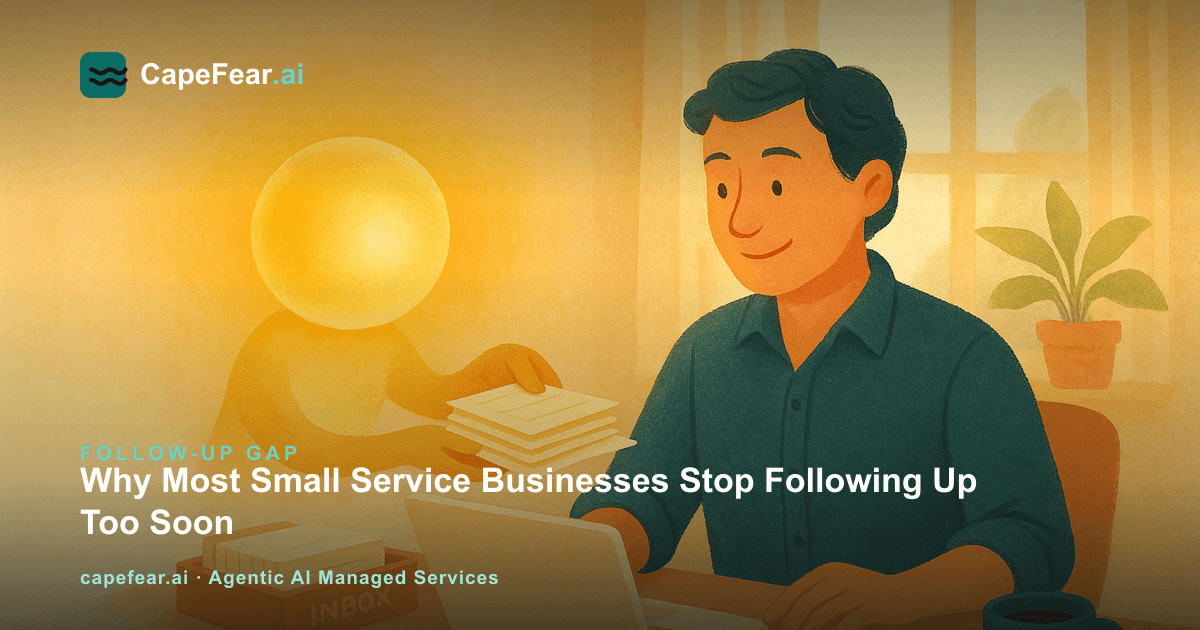
You send the quote on Monday. The prospect goes quiet. By Friday you are swamped with actual work, so you mentally file them as not interested and move on. The problem is that most of them probably were interested. They just needed a nudge you never sent.
Research across sales teams consistently shows that 80% of deals close only after five or more follow-up contacts. Yet 44% of business owners and sales reps give up after a single attempt, and only 8% ever reach the five-touch mark where the bulk of the revenue actually lives.
That gap, between where follow-up stops and where deals close, is a quiet, ongoing revenue leak for almost every small service business running lean.
Why service businesses are especially exposed
A dedicated sales team, when one exists, at least has follow-up as part of the job. For a solo bookkeeper, a two-person HVAC company, or a small insurance agency, the person sending the quote is usually the same person installing the equipment, filing the return, or writing the policy. Follow-up competes directly with delivery, and delivery almost always wins.
The predictable result: one email goes out, sometimes two. If the prospect does not respond quickly, the quote quietly expires. You assume they went elsewhere. Sometimes they did. But research also shows that 60% of customers say no four times before eventually saying yes. The silence is often just timing or distraction, not a final decision.
Most owners know follow-up matters. The problem is making it happen reliably when every hour is already accounted for.
What a working follow-up sequence looks like
You do not need a CRM with fourteen pipeline stages. A simple three-touch sequence covers most of the gap:
- Day 0. Quote sent. Short, clear email with scope and price.
- Day 3. Quick check-in. One sentence: wanted to make sure this landed and see if you have any questions.
- Day 10. Light close. Acknowledge they may have moved in a different direction, and offer a brief call if they have not.
That is three emails over ten days. Most service businesses send one. For context, high-performing sales organizations average sixteen touches per prospect in two to four weeks. You do not need sixteen. You need more than one.
The challenge is not knowing what to write. It is writing and sending it consistently, for every open quote, while you are running the rest of the business.
Where an AI agent fits in
An AI agent does not close the deal for you. What it does is make sure the follow-up sequence actually runs.
The setup is straightforward. When a quote goes out, the agent drafts the day-3 and day-10 follow-up emails based on the quote details and your standard voice. It queues them for your review. You look at each one, adjust if needed, and approve. Nothing sends without your sign-off.
For a busy owner, that shift is meaningful. Instead of remembering to follow up, finding the right words, and sending at the right moment, you review a draft in ten seconds and click approve. The sequence runs. The quote does not quietly expire in your sent folder.
The same pattern extends to other parts of the business. Service reminders after a completed job, renewal notices before a contract lapses, appointment confirmations the day before a visit. Each one follows the same shape: a trigger, a drafted message, and a person who approves before anything goes out to the client.
This is not a sales tool layered on top of your existing work. It is a way to stop losing business you almost had, without hiring someone to chase it for you. You can see how the human-in-the-loop model works on the how it works page, or learn about what we set up for service businesses like insurance agencies and other verticals.
Sources: LeadResponse, "Sales Follow-Up Statistics 2026: 17 Numbers That Explain Why 80% of Deals Require 5+ Touches"; IRC Sales Solutions, "Sales Follow-Up Statistics and Process".