

The Case-Status Call Is Costing Your Personal Injury Firm More Than You Think
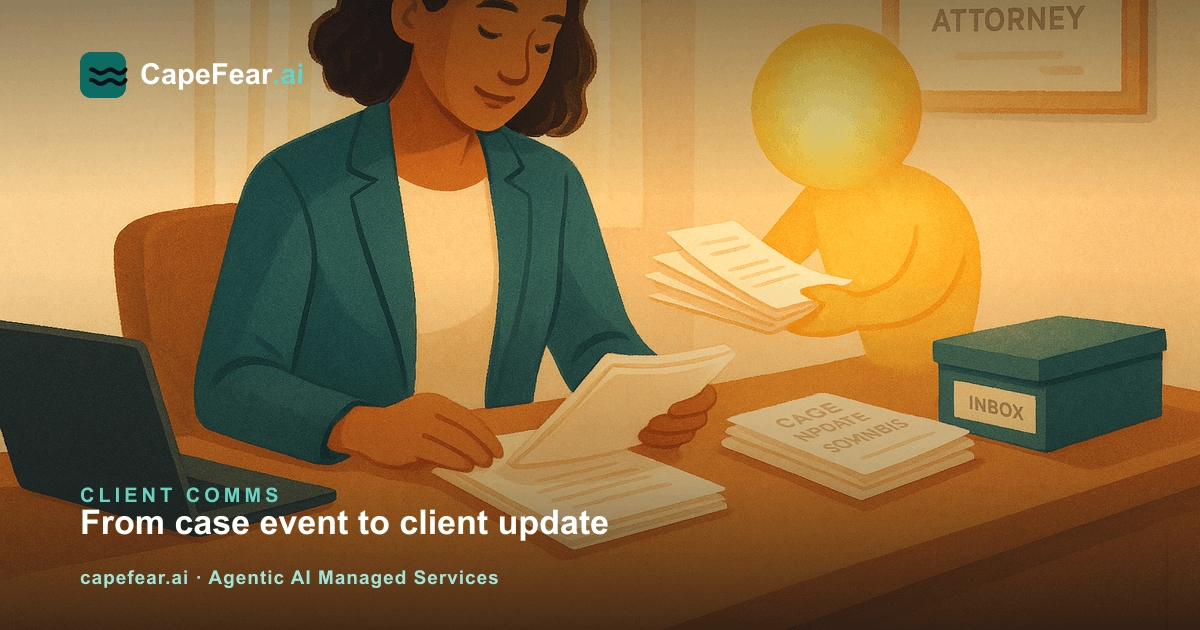
If you run a personal injury firm, you already know this call. Someone on your team picks up the phone, and a client wants to know: has anything changed? Have the medical records come in? Is there any news from the insurance company? Is there anything they need to do?
The call takes four minutes. It happens many times a day. And for most of those calls, the honest answer is: the case is moving, but nothing has changed since last week.
That is not a failure of the attorney or the staff. It is a structural problem. In personal injury cases, weeks or months can pass between meaningful developments. Medical treatment wraps up slowly, records take time to arrive, adjusters respond on their own schedule. For the client, silence feels like stagnation, even when the case is moving exactly as it should.
Why clients call even when nothing has changed
The Case Status Legal Client Experience Report found that one in four legal clients reported feeling anxiety from not knowing what was happening with their case. That anxiety is what drives the calls. Clients are not calling because they distrust you. They are calling because they have no other way to know where things stand.
The same report found that 86% of attorneys handle case status updates daily via phone or email. That is a substantial slice of every workday going to communication that matters for client relationships but produces nothing for the case itself.
The perception gap is worth noting too. Only 40% of clients described their firm as caring, while 72% of attorneys believed their firm was. Clients who do not hear from you regularly fill the silence with doubt, even when your team is working hard behind the scenes.
What proactive updates look like in practice
The simplest change is often the most effective: stop making clients ask. Send them a short note when something happens, and a short note when nothing has happened but the case is still moving. Most clients are reasonable. They do not need daily contact. They need to know they have not been forgotten.
In a busy firm, that is harder to do manually than it sounds. Attorneys are focused on the legal work. Paralegals are managing records requests, deadlines, and provider correspondence. No one has spare time to draft a weekly check-in for every open file on different timelines.
This is where an AI agent can help. Not by replacing attorney judgment, but by handling the drafting and tracking so the attorney can focus on the work that requires legal expertise. A straightforward example of how the workflow can look:
- A case event is logged: medical records from a provider have arrived.
- An agent drafts a short client update: "We received your medical records. We will review them as we prepare your demand package. No action is needed from you right now."
- A staff member reviews the draft, edits if needed, and sends it.
- If no logged event has occurred in ten days, the agent flags the case for a routine check-in, drafts a brief note, and puts it in the approval queue.
The attorney or paralegal decides what goes out. The agent handles the drafting, tracking, and reminders. Nothing sends without human approval. That matters: client communication in a legal matter is something you want a person to sign off on every time, without exception.
The downstream effect on staff capacity
When clients know updates are coming, they stop calling to ask for them. The Case Status Legal Client Experience Report found that firms using automated, proactive client communication averaged over 1,300 hours saved per year in staff time previously spent on routine status inquiries. That is time that can go to casework that actually moves files forward.
For a small firm with a lean staff, even recovering a fraction of those hours makes a real difference. Paralegals spend less of their day on reassurance calls and more time chasing records, coordinating with providers, and working demand packages. The caseload becomes manageable at a higher volume without adding headcount.
It also tends to improve client relationships in a lasting way. Clients who feel informed are easier to work with, more patient during slow stretches, and more likely to refer. Referrals in personal injury come from past clients almost as often as from professional networks. The experience you give during the case is what shapes that.
A practical starting point for a small firm
You do not need a large technology overhaul to start. Most personal injury firms already log the events that matter inside some form of case management software. The pieces usually missing are the automated drafting step and the routing that gets a human to approve the message before it goes out.
A workable starting point: identify the five or six case events that clients most want to hear about (records received, demand sent, offer received, treatment completed, litigation filed), and draft short template language for each one. Add a review step so a paralegal looks at every draft before it sends. An agent can monitor for those events, pull the relevant case context, and surface a ready-to-approve draft. The paralegal spends thirty seconds, not four minutes, and the client gets a timely note instead of waiting until anxiety pushes them to call.
The goal is not to automate client relationships. The goal is to free up the people in your firm to do the judgment-intensive work, while a reliable process handles the tracking and drafting underneath. That is a practical use of AI agents in a personal injury practice, and it is available to small firms today, not just large operations with big budgets.
If you want to see how this works for a small legal firm, visit our how it works page or read more about our approach to legal practice automation.
Sources: Case Status Legal Client Experience Report; Case Status: Personal Injury Practice Area.