

Why Family Law Clients Keep Calling (And How Proactive Updates Change That)
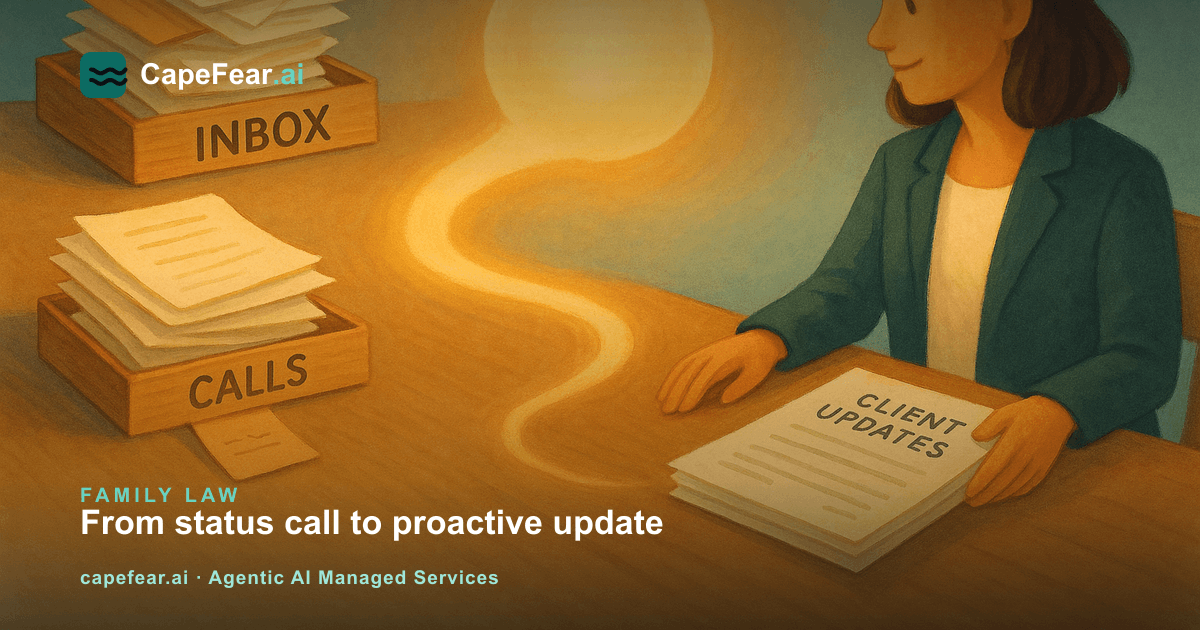
Family law clients are not difficult. They are anxious. A divorce, a custody dispute, or a modification hearing touches every part of someone's life, and the waiting is hard. So they call. They send emails. They ask the same question in a dozen different ways: "Has anything happened? Do you need anything from me? What happens next?"
That is understandable. The problem is that someone has to answer every time.
According to Clio's 2024 Legal Trends Report, the average law firm records only about three hours of billable work in an eight-hour day, a 37 percent utilization rate. Part of that gap is overhead and firm administration. But a meaningful slice is reactive client communication, calls and messages that come in simply because the client has no other way to know what is going on.
The information vacuum that drives the calls
When a client hires a family law firm, they usually get a clear picture of what happens next during the consultation. After that, it often goes quiet. The firm is doing real work, billing it appropriately, and moving the matter forward. But the client does not see any of that. All they experience is silence.
Silence, for someone going through a custody dispute, is very loud.
So they call. The call goes to a paralegal or a receptionist. A note gets taken. Someone circles back when they can. The answer is usually some version of "nothing has changed yet, we will reach out when there is news." The client says thank you. The process repeats next week.
The same Clio research found that only 40 percent of law firms answer their phones during business hours, down from 56 percent in 2019. For a client already in a state of anxiety, an unanswered call makes everything worse.
What a proactive update loop changes
The fix is not faster phone answering. It is sending a brief, honest update before the client has a reason to call.
This does not mean a formal letter every week. It means a short, plain-English note: "We submitted the financial disclosure yesterday. The court's deadline for a response is [date]. Nothing urgent is needed from you right now. We will reach out if that changes."
That kind of message takes a few minutes to write when the information is already in the file. The challenge is that someone has to remember to send it, and that is exactly the kind of thing that slips when a practice is busy and the staff is already stretched.
An AI agent can monitor a matter file, recognize when something has happened (a document filed, a deadline passed, a hearing confirmed), draft a short status note, and queue it for the attorney's review. The agent does not send anything on its own. A person reads the draft, adjusts it if needed, and approves it. The client gets a message. The call does not happen. This is what we mean when we describe how our agents work: read the file, draft the output, hand off to a human for the final call.
The math on interruptions
A five-minute status call does not take five minutes. It takes five minutes plus the time to pull up the file, plus the context switch out of whatever the paralegal was already doing, plus a note about the call for the matter record. In a busy family law office, that adds up quickly across a week.
More importantly, the interruption pattern affects work that needs real focus. A paralegal drafting a financial affidavit, pulled away three times in a morning to answer status questions, is more likely to make small errors that cost time to fix. Attention is not free.
Proactive updates reduce incoming call volume. They do not eliminate it, and they are not meant to replace real client conversations. But a client who heard from the firm on Monday is much less likely to call on Thursday just to confirm someone still knows their name.
What this looks like in a small firm
For a small family law office, a proactive update workflow looks roughly like this. A new activity in the case management system (a filing confirmed, a hearing date set, a document received from opposing counsel) triggers a check. The agent reviews what happened, drafts a one-paragraph plain-English client note, and flags it for the attorney's review. The attorney reads the draft, makes any edits, and approves. It sends via email.
The client receives a short message that tells them something real happened and what, if anything, comes next. The staff did not spend time on a reactive call. The attorney's name is on something accurate and appropriately scoped, because they reviewed it before it went out.
That last part matters. Family law communication carries real professional responsibility implications. The agent handles the drafting and the timing. The attorney handles the judgment. That is the right division of labor for work at the intersection of AI and a client who is having one of the harder years of their life. You can read more about how we work with family law and legal practices specifically.
Sources: Clio 2024 Legal Trends Report highlights; Clio Legal Trends Report 2024.