You Don't Have to Be In-Network to Get Paid Directly. 30 States Now Say So.
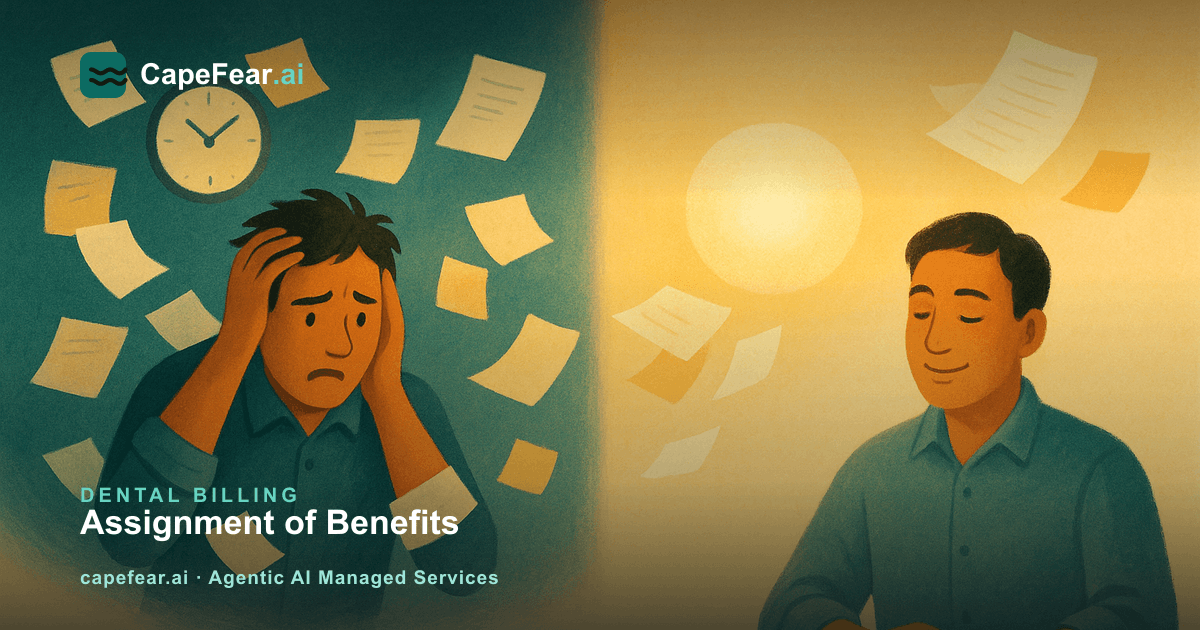
If your practice is out-of-network with a plan, you probably assume the insurer sends the check to the patient and you collect from them after the fact. In 30 states now, that is no longer how it has to work.
Oregon and Maryland both enacted assignment of benefits laws in 2026, bringing the total number of states requiring this to 30, according to the American Dental Association's tracking of this year's legislative sessions. The rule is simple: if a patient signs an assignment of benefits form asking the insurer to pay the dentist directly, the insurer has to honor it, regardless of whether that dentist is in the plan's network.
What these laws actually change
Before an assignment of benefits law exists in a state, an out-of-network dentist is often at the mercy of the plan's own policy. Some insurers pay the patient and let the dentist chase them for the money. That turns every out-of-network claim into a collections problem the front desk did not sign up for.
Where the law is in effect, an insurer that gets a valid assignment of benefits form has to cut the check to the practice, full stop. Maryland's version goes a step further: if a patient does not choose assignment of benefits, the insurer has to notify them that the payment is going to them directly, not the dentist, so there is no confusion about where the money went.
The catch: when it is law is not the same as when it is in effect
Oregon's new law, HB 4040, does not take effect until January 2028, even though it passed in 2026. It also sets a 45-day deadline for insurers to pay or deny a clean claim, and caps retroactive claim audits at 18 months. The ADA's reporting on the broader 2026 legislative session notes similar lag between a bill's signature and its effective date in several states, and notes that some insurers choose to comply early rather than wait out the clock.
That means two things worth checking for your own state: first, whether an assignment of benefits law exists at all, and second, whether it is actually in force yet or still working through an implementation delay. The 2026 wave also touched recoupment windows directly: Connecticut cut its overpayment lookback from 18 months to 12, and Indiana cut its from two years to 180 days, so the same legislative session that is expanding your right to get paid is also shrinking the insurer's window to take that money back later.
What to do with this at the front desk
An assignment of benefits form is only useful if it is actually collected and submitted with every out-of-network claim, not just the ones someone remembers to flag. That is a small, repetitive, easy-to-drop task, which is exactly the kind of thing an AI agent can carry without anyone having to think about it: it reads the incoming claim and patient file, checks whether an assignment of benefits form is on file, drafts the request to the patient if it is missing, and flags the claim for a person to review before anything goes out the door. The agent proposes, your team still approves and sends.
If you want a clearer picture of what that looks like for a dental front desk specifically, our dental page walks through where this fits alongside insurance verification and recall work. For practices juggling payer-side rules more broadly, how it works covers the human-approval step in more detail.
Sources: ADA News, "State dental insurance reforms continue momentum in 2026 legislative sessions"; ADA, Dental Insurance Reform: Assignment of Benefits.